

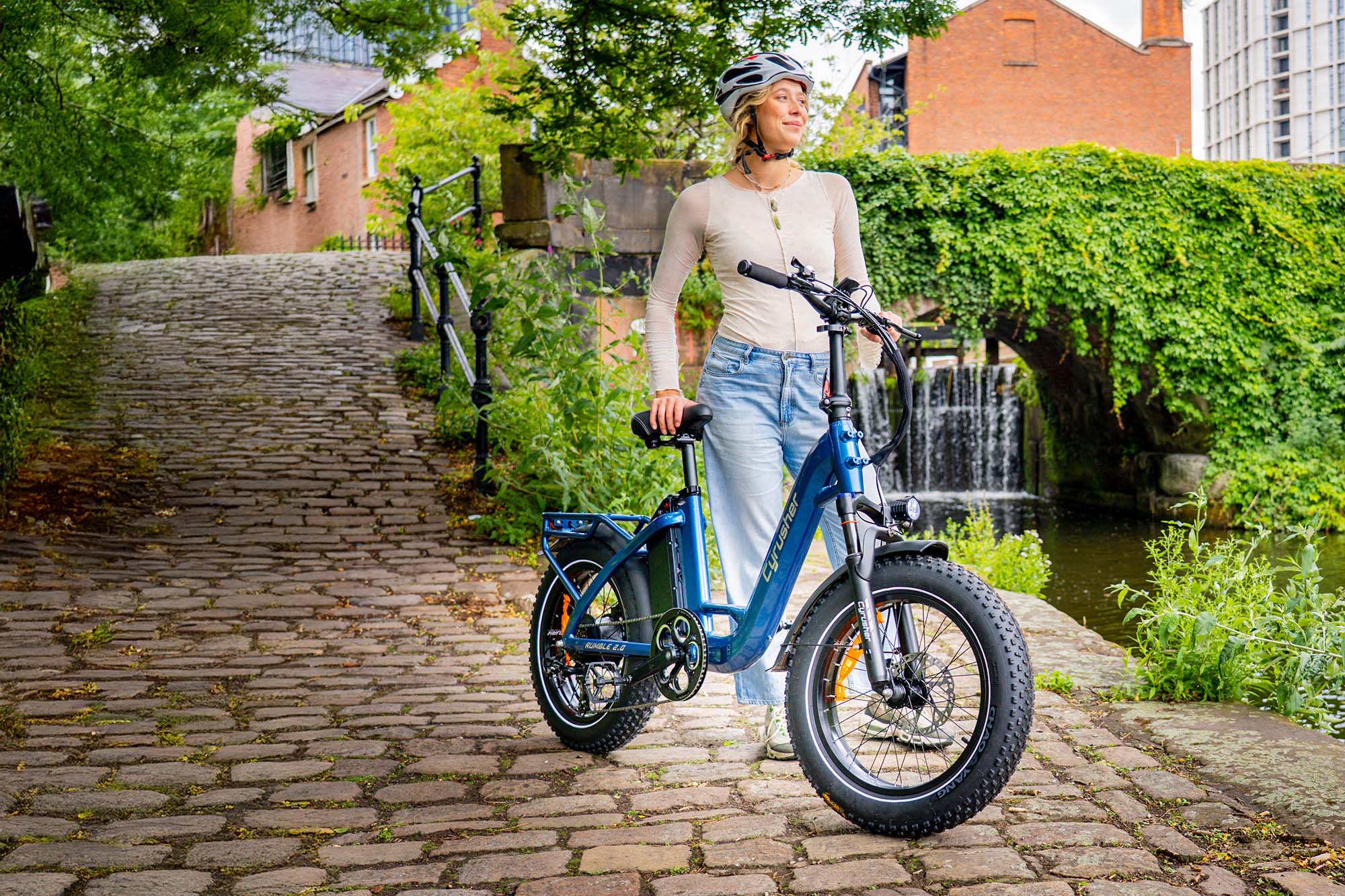
Choosing between two attractive, step‑through fat‑tire ebikes is harder than it looks on paper. Both the Engwe L20 Boost and Cyrusher Rumble 2.0 promise comfort, power, and everyday practicality, but they deliver those strengths in slightly different ways.
This guide walks through performance, range, comfort, practicality, and price with a focus on how each bike actually feels and behaves in daily riding, not just on a spec sheet. By the end, you should know exactly which model is the smarter buy for your style, terrain, and budget.
Quick Overview
Key Technical Specs Side by Side
| Feature | Engwe L20 Boost | Cyrusher Rumble 2.0 |
|---|---|---|
| Price | €1,099.00 | €1,199.00 |
| Motor | 48V 250W rear hub, max 75 Nm with boost button | 48V 250W rear hub, 85 Nm torque |
| Sensor type | Torque sensor (more responsive, efficient assistance) | Torque sensor (more resonsive, efficient assistance) |
| Battery | 48V 13 Ah (approx. 624 Wh) removable battery | 48V 18 Ah removable battery (approx. 864 Wh) |
| Claimed range | Up to 126 km in PAS 1, about 85 km at higher speeds | Up to 94 km (58 mi) on a charge |
| Top assisted speed | Up to 25 km/h (EU‑legal) | Up to 25 km/h on Level 5 PAS (EU class) |
| Brakes | Mechanical disc brakes, 160 mm rotors | Hydraulic disc brakes, 180 mm front + rear |
| Frame style | Step‑through with included front basket & rear rack | Step‑through with integrated rear rack |
| Tires | 20″×4.0″ fat tires | 20″×4.0″ Chaoyang fat tires |
| Suspension | Front fork suspension (50 mm travel) | Front oil & spring suspension fork, suspension seatpost option |
| Display | Color display with 5 PAS levels | 3.5″ color LCD smart computer |
| Gearing | Shimano 7‑speed | Shimano 7‑speed (TX50/M315 drivetrain) |
| Approx. weight | Not explicitly listed | 31.9 kg (70.32 lb) with battery |
| Payload capacity | Front basket up to 10 kg; rear rack up to 25 kg | Up to 350 lb total payload |
The Engwe L20 Boost is a compact, step‑through 20″×4.0″ fat‑tire ebike built to maximize torque, control, and utility in a legal 250W package. It pairs a 48V system with a torque sensor and a unique 75 Nm “power boost” button, aiming at riders who want responsive assistance and practical cargo options for shopping, commuting, and mixed‑terrain city riding.
The Cyrusher Rumble 2.0 is also a 20″×4.0″ step‑through fat‑tire bike, but it leans into comfort, range, and refinement, combining a 48V 250W rear hub motor (85 Nm), integrated rear rack, hydraulic disc brakes, and a large color LCD. It targets riders who prioritize smooth control, longer rides up to about 94 km, and a more integrated, premium‑feeling package.
Motor power
On paper, both e-bikes are equipped with a 48V 250W rear hub motor, but they are tuned differently and feature distinct control systems. The Engwe L20 Boost places a strong emphasis on torque output and instantaneous response: its system delivers up to 75 Newton metres (Nm) of torque and features a dedicated power boost button, which provides explosive climbing power or rapid acceleration at the touch of a button.
The Cyrusher Rumble 2.0 boasts a maximum torque of 85 Nm, offering greater torque than the Engwe L20 Boost, which is more than sufficient for practical use on urban inclines and light off-road terrain. Through its Pedal Assist System (PAS) and speed sensor, the Rumble 2.0 focuses on delivering a smooth and predictable power curve, making speed control effortless. It also allows riders to tailor their riding pace to suit different terrain conditions.

Braking Performance
Here, Cyrusher clearly plays the premium card. The Rumble 2.0 uses 180 mm hydraulic disc brakes front and rear, which give strong, progressive stopping power with minimal lever effort and very consistent performance in wet or dry conditions. For heavier riders or those carrying cargo regularly, this system inspires confidence, especially on descents.
The Engwe L20 Boost runs mechanical disc brakes with 160 mm rotors. They are reliable and simpler to service, but require more lever pull, and feel less powerful and less modulated than a good hydraulic setup, especially under repeated braking or in rain. For mostly flat urban riding, they’re adequate, but riders planning long descents or frequent stop‑and‑go with loads will notice the difference.
How Far Can You Really Go?
Battery Capacity and Claimed Range
The L20 Boost carries a 48V 13 Ah battery (around 624 Wh) that Engwe rates for up to 126 km in PAS 1, with around 85 km at higher speeds or heavier assist usage. That’s a strong range figure for a compact utility ebike and is helped by the torque sensor’s more efficient power delivery.
The Rumble 2.0 steps up to a larger 48V 18 Ah battery (roughly 864 Wh), yet Cyrusher quotes “up to 94 km (58 miles)” per charge. More powerful motor torque and battery configurations can provide reliable power for climbing hills. You can get a long, practical range that comfortably covers daily commuting and leisure rides.
Charging, Lifespan, and Practical Use
Both bikes use removable batteries, making it easy to charge indoors at home or at the office. The Rumble 2.0’s 48V 18 Ah pack is paired with a 48V 3.0A charger and a 6–7 hour charging time, with a stated lifespan of around 800 cycles, which is in line with quality lithium‑ion packs and suggests several years of regular use if properly maintained. Engwe doesn’t spell out the cycle life in its product page, but its removable 48V 13 Ah battery and portable format are clearly designed for daily city use; typical ebike packs of this class also land in the several‑hundred‑cycle range.
For riders who do mostly short trips and value lighter overall weight and efficiency, the Engwe’s smaller battery makes a lot of sense. For riders who want to stretch into full‑day rides or who regularly ride higher PAS levels without worrying about charging, the Rumble 2.0’s larger battery is a strong advantage.
Comfort and Everyday Practicality
Accessibility
Both ebikes are step‑through designs aimed at easy mounting and dismounting. The Engwe L20 Boost’s frame, paired with 20″ wheels, keeps standover low and makes it approachable for a wide range of riders who may be intimidated by taller, high‑step frames. It’s particularly convenient in stop‑and‑go urban traffic.
The Rumble 2.0 also uses a low‑step 6061 aluminum frame with internal battery routing, which gives it a sleek, integrated look. Cyrusher lists a wide usable rider height range and emphasizes comfort for riders of different ages and mobility levels; the adjustable saddle and option for a suspension seatpost add to this focus. The frame design is suitable for the majority of riders, offering greater inclusivity for the cycling community.

Suspension and Ride Feel
Both bikes feature a front suspension fork. The L20 Boost mentions a robust front fork with 50 mm of travel to soak up bumps and improve control on rough streets or light trails. The Rumble 2.0 uses an oil & spring suspension fork with adjustability and pairs that with an optional suspension seatpost, offering more comfort, especially on longer rides or broken pavement.
In practice, the Engwe feels nimble and direct, helped by its torque sensor and compact dimensions, making it easy to thread through traffic and react quickly. The Rumble 2.0 rides more like a small, cushioned SUV on two wheels: very stable, planted, and forgiving, with its fat Chaoyang tires and refined suspension doing a lot of the work to smooth out bad surfaces.
Cargo, Lighting, and Daily Utility
The L20 Boost leans hard into utility out of the box. You get a spacious front basket rated up to 10 kg and a rear rack rated up to 25 kg, giving you clear, practical capacity for commuting, grocery runs, or light delivery tasks without additional accessories. Front and rear lights (with integrated brake lights) are standard and designed to maximize visibility.
The Rumble 2.0 features an integrated rear rack that blends into the frame visually while still offering solid carrying capability, plus a bright LED headlight and integrated rear taillight with brake‑light function. That integrated look will appeal to riders who want a tidier aesthetic rather than a more “bolted‑on” utility appearance. Its higher payload rating (up to 350 lbs including rider and cargo) makes it a good fit for heavier riders or those who regularly haul gear.
Price and Value
The Engwe L20 Boost is positioned as an affordable 250W step-through electric bike with excellent load-carrying capacity. Priced at €1,099, it offers better value for money than the Rumble 2.0, which costs €1,199; however, on balance, the €100 saving also means compromising on some performance.
The Cyrusher Rumble 2.0, with its larger battery, hydraulic brakes, integrated design, and more robust overall package, generally sits higher. You are paying for more powerful motor, longer range, a more sophisticated braking system, and a more integrated finish. For riders who value the “complete package” feel and plan to ride long and often, that extra €100 can translate directly into daily comfort and confidence.
How to Make a Wise Choice
You’ll make the best decision by matching the bike to your primary use case. If you mostly ride in the city, value engaging pedaling, tackle short but sharp hills, the Engwe L20 Boost is a good choice. If you’re aiming for longer mixed‑terrain rides, regularly carry more weight, or simply want maximum comfort and confidence with hydraulic braking and a large battery, the Cyrusher Rumble 2.0 is the better long‑term partner.
In terms of price, the Rumble 2.0 is more expensive. However, when it comes to value for money, it offers superior performance and specifications. For users who care about long-term use, choosing a model with better performance and features will lead to a more comfortable riding experience.
Delen:
Cyrusher Glider: le migliori bici elettriche cargo economiche per le famiglie nel 2025
Cyrusher Nova vs Engwe L20 SE: Which Compact Commuter Ebike Fits You Best?